Buying Kinah from a reliable seller will save you time and money. Checking Marketplace prices and demand can also help.
NCSoft’s MMORPG Aion 2 launched globally on October 5, 2026, and is free to play on PC via Steam and the PURPLE launcher. Here are the best tips for beginners, including which faction and class to pick, how to level up to 45 in four hours, and which gear to enhance.
What is Aion 2 Kinah?
Kinah is the currency that moves through all of Aion 2’s endgame earning channels, from story missions to daily gold dungeon rewards. It is also the currency that allows players to access premium content, including equipment upgrades, fast travel, Daevanion board resets, and marketplace items. Free players earn it steadily; smart players manage it deliberately.
In Aion 2, the fastest way to generate AION2 Kinah is through quests, especially those that provide a mix of XP and useful materials. These are fast, simple tasks that don’t rely on luck or require high gear. If you can fit them into your daily routine, they provide a reliable source of income that never fluctuates.
Other ways to generate a steady flow of in-game currency include running Sealed Dungeons and Strongholds, which offer a quick payout for clearing a set number of battles. They are a great alternative to relying on lower-level mob grinding, and they often contribute toward overall character progression.
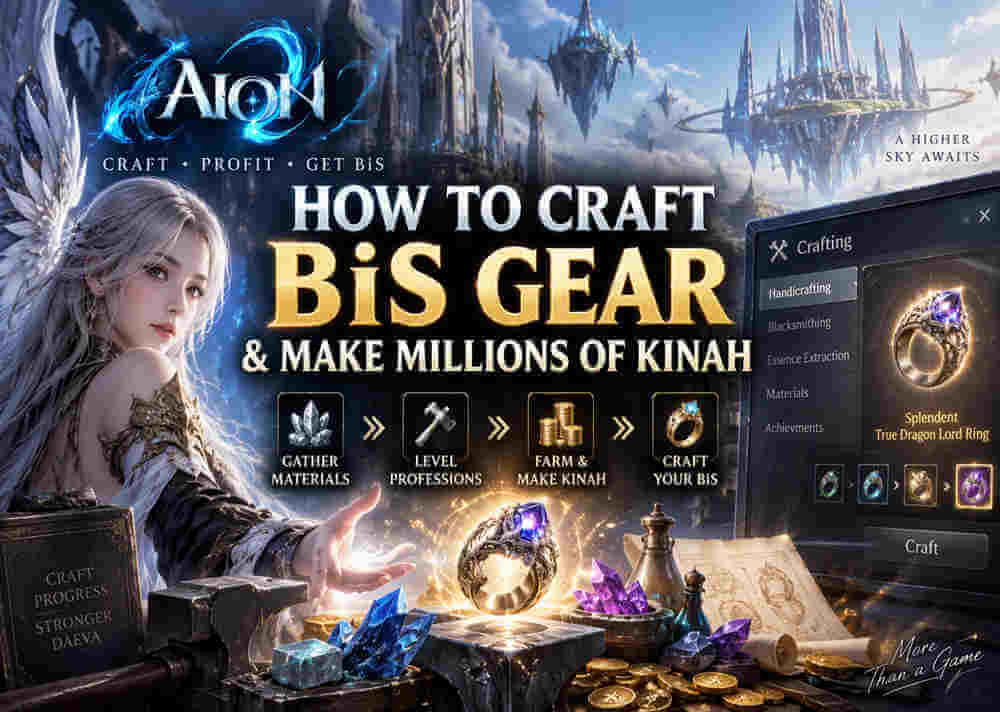
Gathering and crafting are also good ways to increase your income in Aion 2. The open world contains numerous resource nodes that drop valuable drops like ore, wood, aether, and herbs, and many of these can be sold at the Marketplace for a substantial profit. It’s important to remember that the Marketplace is a player market, and prices can change rapidly based on demand. Keep an eye on Marketplace prices, and be sure to check for new items that may boost the value of your harvests.
How can I buy Aion 2 Kina?
Buy Aion 2 Kina is a smart way to accelerate progression without wasting time farming. It lets you invest in high-impact gear, essential consumables, and rare collectibles that enrich your gameplay experience. Aion 2 top players often balance grinding and purchasing to meet their progression needs.
A balanced approach works best, and avoiding unreliable sellers is critical. Check marketplace reputations, buyer feedback, and delivery methods before completing a transaction. Look for options that offer quick and secure in-game delivery. Most orders are completed within 30 minutes when the seller is online, but delivery times can vary.
For dedicated farmers, efficient routes can provide a reliable source of Kinah for equipment upgrades and other investments. The key is to prioritize spending on items that improve your effectiveness in PvE or PvP. For example, crafting materials are in continuous demand, and enchanting can reliably pay for itself within one play session.
Other items are more expensive, such as high-level equipment or exclusive dungeons. These can be time-sensitive, and it may be wise to keep a reserve that lets you participate in them quickly. Avoid overspending by balancing your buy Aion 2 Kinah with regular income sources, such as selling equipment and rare collectibles.
What is Aion 2 gold?
Aion 2 Gold is the in-game currency that allows players to buy equipment, valuable resources, and progress their characters through the game. The in-game economy uses a combination of everyday gameplay, intelligent spending, and efficient farming to accelerate gear upgrades and bolster your characters readiness for higher-level content.
The game’s in-game marketplace provides a great way to acquire rare materials and gear components, but it requires a substantial amount of gold to make the most of it. The best method to obtain in-game gold is through a smart combination of daily dailies, dungeons, gathering, and player-driven markets. Stacking these methods in a fixed order and tracking their Kinah-per-hour weekly yields greater consistency than isolating one activity that may have a higher payout but takes twice as long.
Efficiently upgrading your Aion 2 cards is another great way to boost your characters progression. A well-rolled Legend (Purple) card can surpass a character’s base level threshold for the core skill and set bonus, but be sure to save enhancement material to reroll a lower-rarity card when possible.
Aion 2’s Arcana system is a key progression method after the early game, providing Gear Score and Empyrean Lord stat increases through cards that unlock as your character levels up. It’s important to optimize your cards by filling slots, targeting critical skills, and using the fastest, most efficient ways of obtaining them, such as through the Season Shop, extraction, or acquiring a high-synergy Legend (Purple) card.
What is Aion 2 currency?
Unlike its largely subscription-based competitors, Aion 2 does not offer pay-to-skip timers, pay-to-roll gear, or loot-box-driven progression. Instead, its monetization sits in the cash shop, which sells convenience, cosmetics, and a few gear-adjacent items, but never locks away core content behind a paywall. That makes the game genuinely F2P-friendly for players willing to commit hours of grind.
To maximize in-game wealth, budget F2P players must learn the ins and outs of the economy. That includes avoiding common money-losing mistakes like spending on expensive gear that doesn’t earn back its cost, and understanding the value of alternative characters in an Aion 2 economy that constantly changes.
The game’s main two currencies, Kina and Quna, have different purposes. Kina is earned from gameplay and spent on market purchases cheap Aion 2 Kinah; Quna is a premium Aion 2 currency used in the cash shop and for the game’s battle pass. The cash shop itself does not resemble a traditional subscription model, but it does have bundles that can be bought with Quna. The battle pass also has a per-character scope, and that can make its $15 cost feel excessive to self-described F2P purists.
As a result, the biggest challenge for F2P gamers is knowing how to make every Kinah dollar count. That means using alts wisely and tracking the relative profitability of each farming method. It also means balancing dungeons and open-world grinding, paying attention to crafting demand, and keeping enough alts in reserve to react to new opportunities.